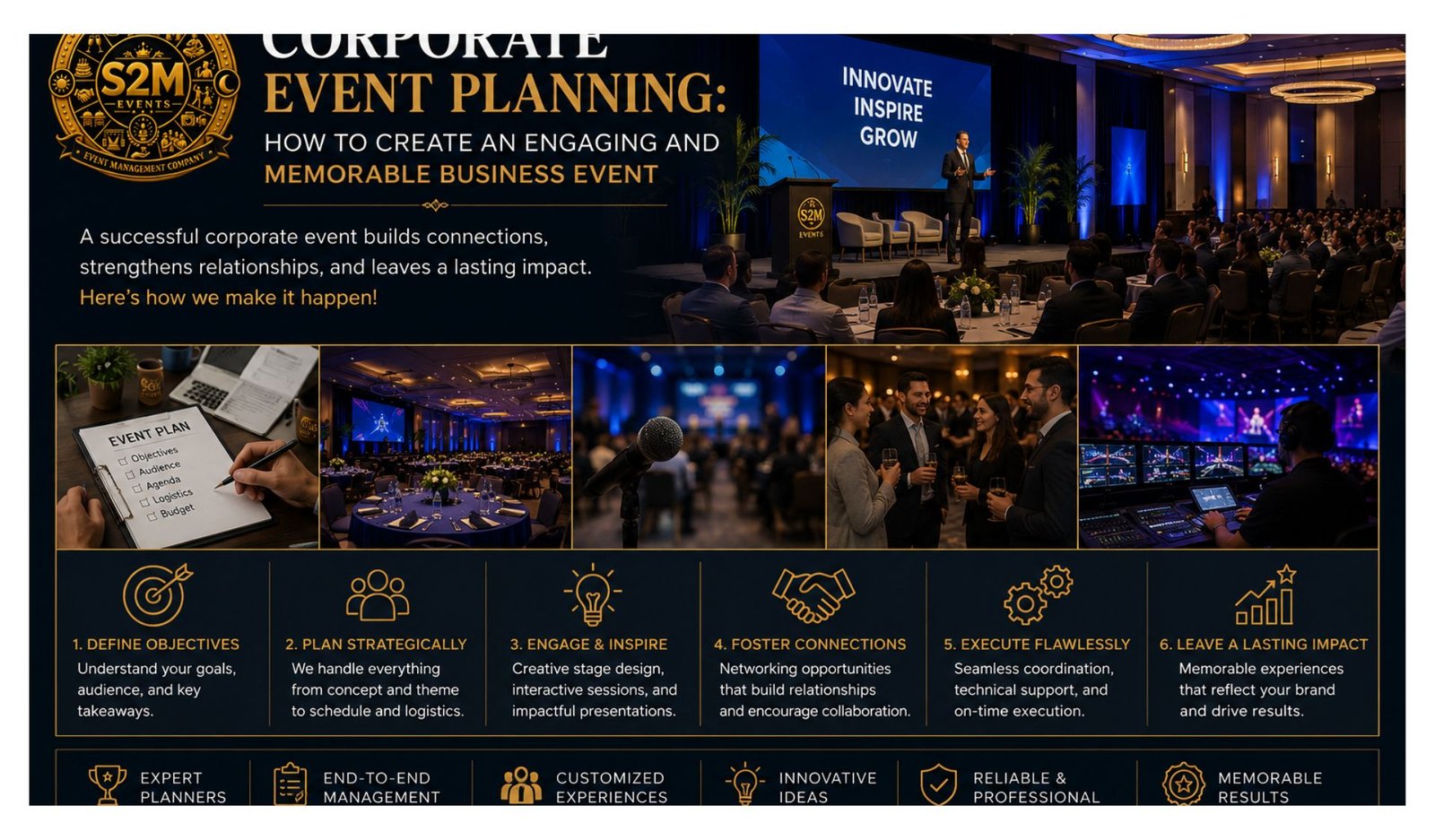
Corporate Event Planning: How to Create an Engaging and Memorable Business Event
A successful corporate event is more than a gathering of employees, clients, or business partners. It is an opportunity to strengthen relationships, showcase your brand, engage your audience, and create meaningful business connections. With professional planning and creative execution, a corporate event can leave a lasting impression on every attendee.
Whether you are organizing a corporate conference, business seminar, product launch, annual meeting, team-building event, networking event, award ceremony, or company celebration, this guide will help you create an engaging and memorable business event.
1. Define Your Corporate Event Goals
Before making any arrangements, clearly define the purpose of your event. Are you launching a product, celebrating business achievements, educating employees, building client relationships, or generating new leads?
Your objectives will influence the event format, venue, budget, entertainment, content, and guest experience. Clear goals also make it easier to measure the success of your corporate event.
2. Know Your Target Audience
Understanding your attendees is essential for effective corporate event planning. Consider their professional backgrounds, interests, expectations, and reasons for attending.
A client networking event may require a sophisticated atmosphere, while an employee engagement event may benefit from interactive activities, entertainment, and team-building experiences.
3. Choose the Right Venue
The venue plays a major role in creating the right atmosphere. Consider location, capacity, accessibility, parking, technology infrastructure, seating arrangements, catering facilities, and overall ambience.
For a professional business event, the venue should support your brand image while providing a comfortable and engaging environment for attendees.
4. Create a Strong Event Theme and Brand Identity
A memorable corporate event theme can make your business event more distinctive. Incorporate your company’s branding through stage design, signage, digital screens, invitations, welcome areas, table settings, and promotional materials.
Consistent branding helps reinforce your company’s identity and creates a professional visual experience.
5. Make the Event Interactive
One of the biggest challenges in corporate events is keeping attendees engaged. Instead of relying entirely on speeches and presentations, introduce interactive experiences.
Consider:
- Live polls and audience Q&A
- Networking sessions
- Interactive workshops
- Team-building activities
- Product demonstrations
- Photo and social media zones
- Live entertainment
- Games and competitions
Interactive event experiences encourage participation and make the event more memorable.
6. Invest in Professional Event Technology
Modern corporate event management increasingly depends on technology. LED screens, professional sound systems, stage lighting, live streaming, digital registration, event apps, QR codes, and interactive presentation tools can improve both communication and guest experience.
For conferences and product launches, high-quality audio-visual production is particularly important for delivering presentations effectively.
7. Plan Catering and Hospitality Carefully
Food and hospitality have a significant impact on the attendee experience. Offer a well-planned menu that considers the event duration, audience preferences, dietary requirements, and event format.
Welcome drinks, refreshments, lunch, dinner, and networking breaks should be coordinated with the event schedule to keep the program running smoothly.
8. Create Memorable Entertainment
Professional entertainment can add energy and personality to a corporate event. Depending on the audience and objectives, consider live music, DJs, performers, motivational speakers, cultural performances, interactive entertainment, or award ceremonies.
Entertainment should complement the event rather than distract from its purpose.
9. Focus on Seamless Event Execution
Successful corporate events depend on detailed coordination. Every element—from vendor management and event logistics to guest registration, stage setup, catering, entertainment, technical support, and on-site coordination—must work together.
A professional event management team can monitor the schedule, coordinate vendors, handle unexpected issues, and ensure the event runs according to plan.
10. Measure Event Success
After the event, evaluate its performance against your original objectives. Collect attendee feedback and review registrations, engagement, networking outcomes, social media activity, leads, and overall satisfaction.
Post-event analysis helps businesses understand what worked and improve future corporate events and business experiences.
Create Extraordinary Corporate Events with S2M Events
A memorable corporate event combines strategic planning, creative event design, professional coordination, technology, and exceptional guest experiences.
At S2M Events, we help businesses transform their ideas into professionally planned and engaging events. From corporate conferences and product launches to networking events, award ceremonies, team-building programs, and company celebrations, our team manages every detail with creativity and precision.
Your business has a story to tell. Let S2M Events create an experience your audience will remember.